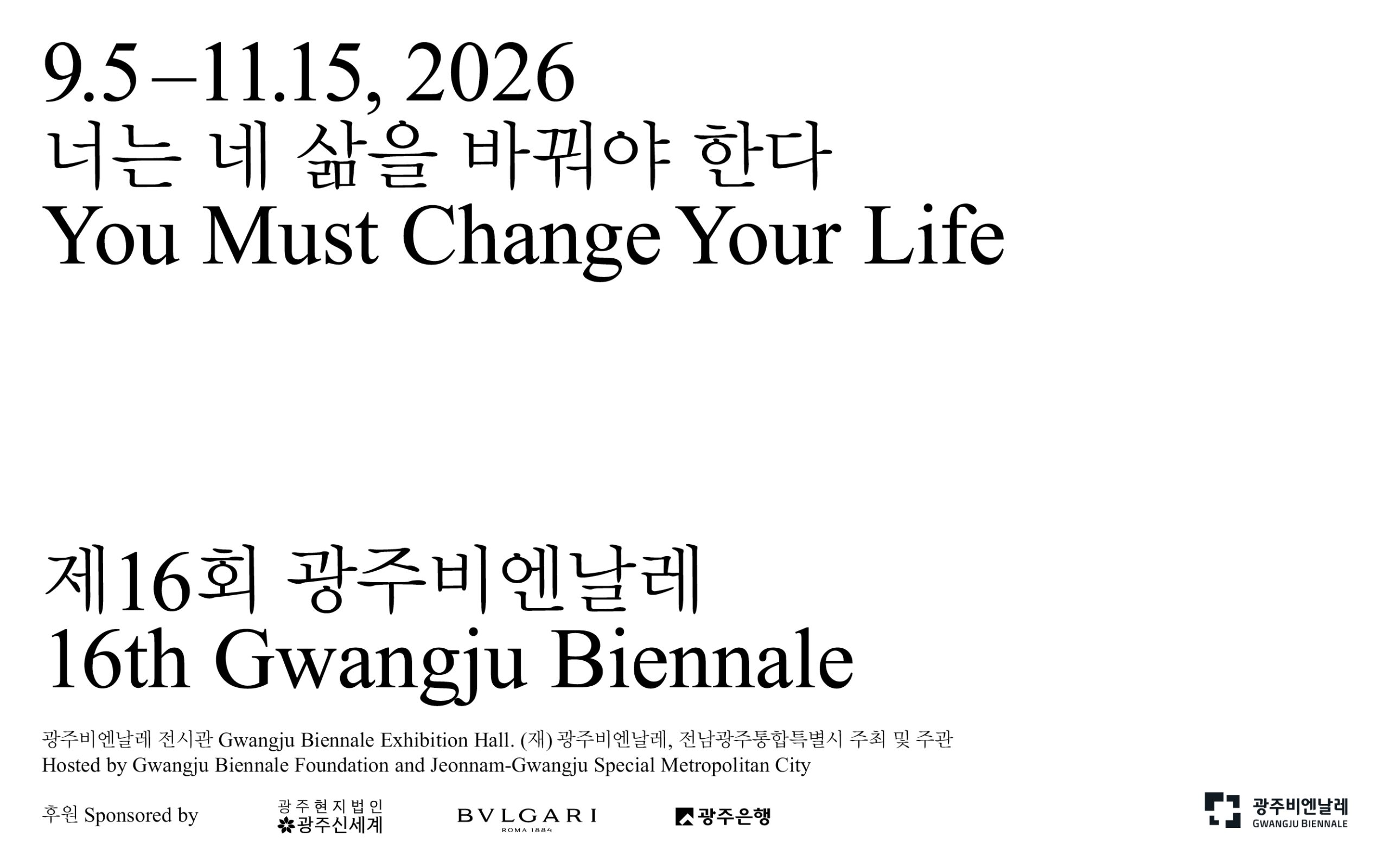
TAF Conversation Series: Jacqueline Kiyomi Gork with Ho Tzu Nyen and Tobias Berger
Date: Saturday, 5 September 2026
Time: 5.00PM – 6.00PM
Location: Geosigi Hall, Gwangju Biennale Exhibition Site
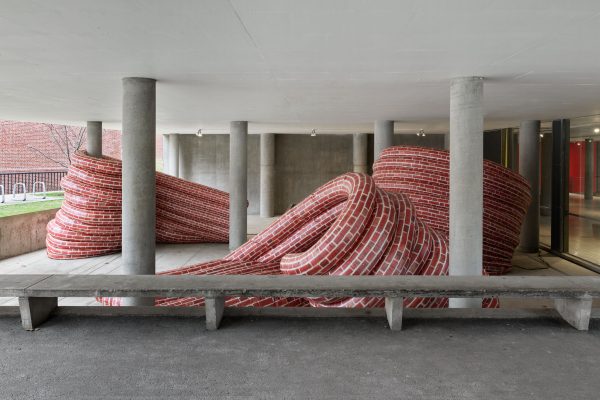
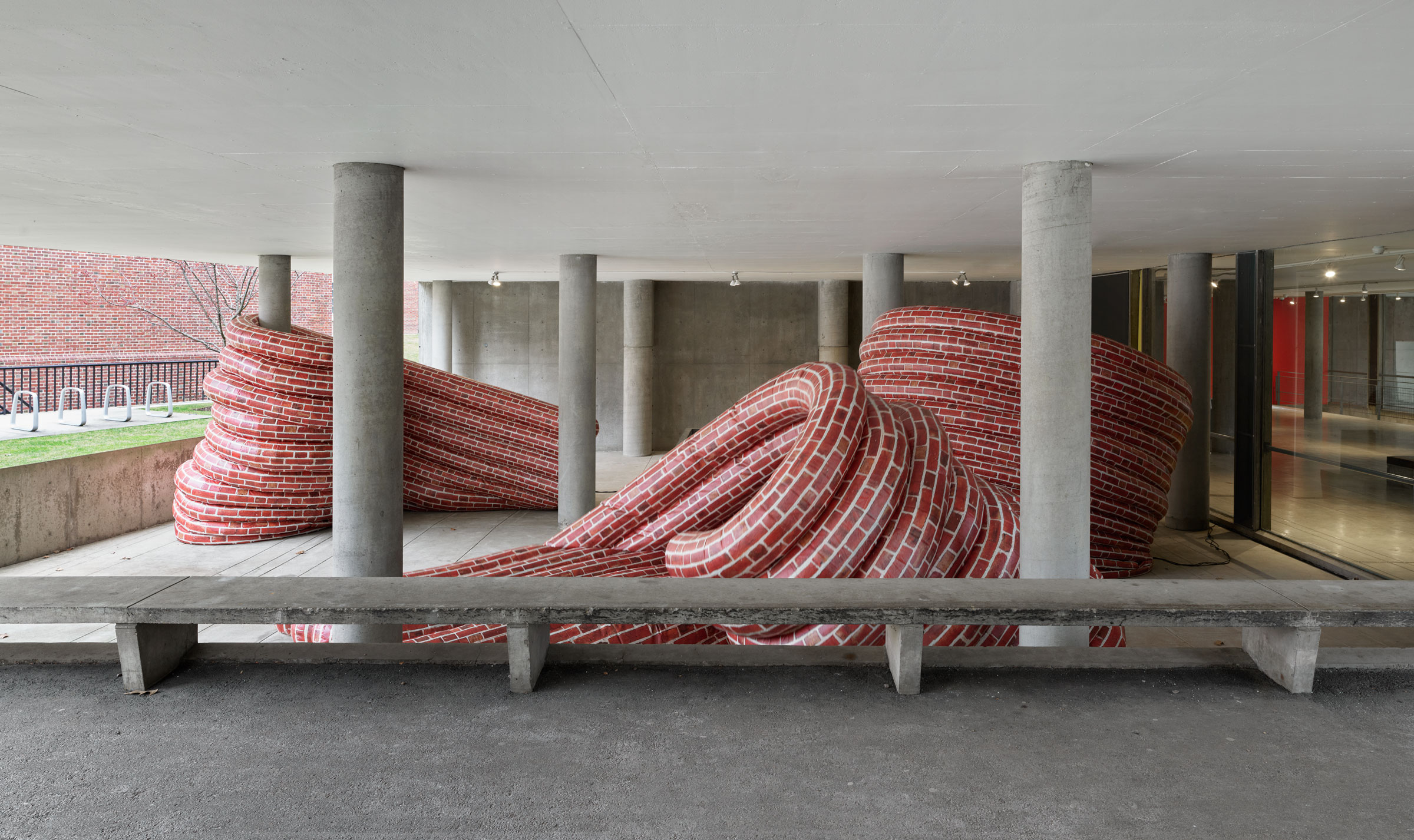
Presented in collaboration with the 16th Gwangju Biennale, this iteration of the TAF Conversation Series brings together artist Jacqueline Kiyomi Gork, Gwangju Biennale Artistic Director Ho Tzu Nyen, and curator Tobias Berger. Taking place during the biennale’s opening talks programme, the conversation will consider Gork’s hybrid practice across sound installation, sculpture and performance, alongside her new work, Not Exactly BPM (Variation Rrose) (2026), presented at the biennale with support from TAF. Conceived as a labyrinthine installation and multi-channel techno composition, the work creates a sensorial environment that intensifies perception, bringing together the isolation and communal collectivity inherent to feedback systems and club culture.
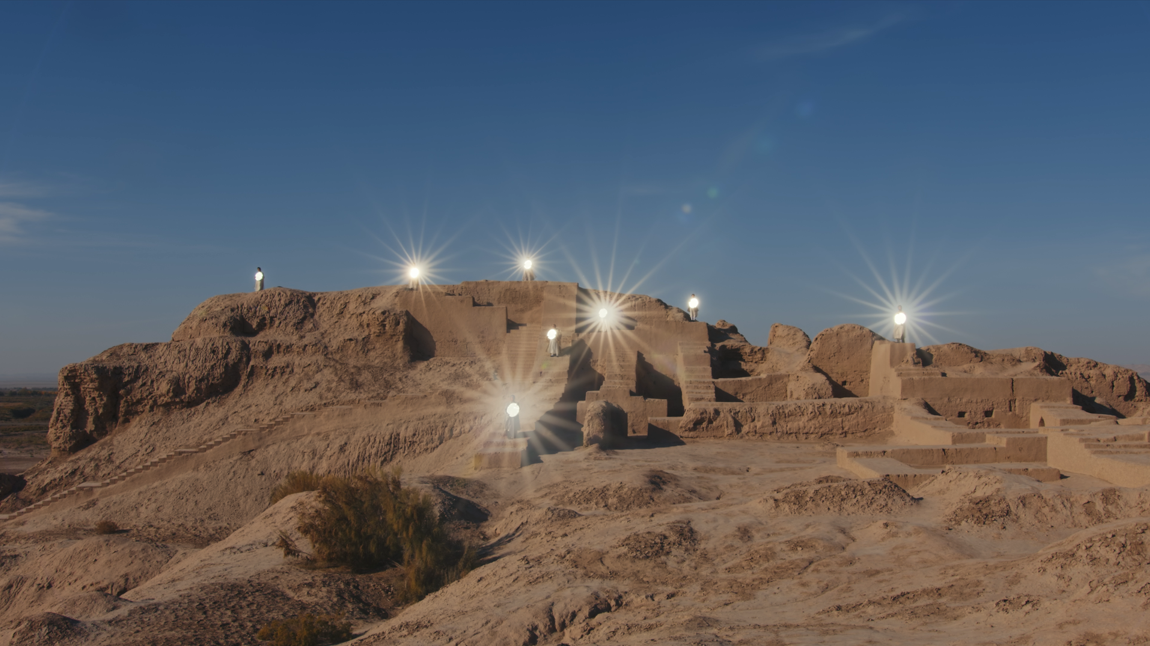
A second iteration of the TAF Conversation Series will take place during the biennale’s closing week in November, featuring artist Saodat Ismailova. Further details to be announced soon.
About TAF Conversation Series
Through the Conversation Series, TAF invites artists and their collaborators to share how their processes and research might shape and respond to TAF’s research concerns. In its second year, TAF’s Conversation Series will be guided by lessons on recovery, focusing on practices that inspire through instruction. TAF will invite contemporary artists from the region and diaspora of Southeast Asia to share how they have envisioned or built collective platforms, proposed and complicated systems of knowledge, and communicated across contexts and differences. These sessions aim to uncover the reciprocal support and conditions of labour required to sustain healing, growth, and connection.
About the 16th Gwangju Biennale
Inspired by the final line of Rainer Maria Rilke’s poem Archaic Torso of Apollo, the 16th Gwangju Biennale explores how new capacities and forms of life emerge through artistic practice.
In Rilke’s 1908 poem, a fragment of an ancient sculpture releases within its viewer an overwhelming surge of emotional energy, culminating in the injunction: “You must change your life.” Yet the poem offers no prescription. Transformation remains open—urgent, but not yet determined. Taking inspiration from this imperative, the Biennale approaches change not as a destination but as a method: a process through which matter, bodies, perceptions, and relations are continually reorganized.
Change is often most immediately visible to us in moments of rupture and crisis. Yet change also unfolds quietly and unnoticed, like the changes in faces of the loved ones we see daily. And change also unfolds through the accumulation of our everyday acts and rituals as they accumulate to practices of repetition that brings about difference and. It is through such practices that we expand our capacity to affect—and to be affected.
A central proposition of this Biennale is that change is sustained through practice. But in order to be generative, any practice must be sustainable enough to repeat across multiple scales of life. Repetition is what shapes how we perceive, how we relate, and how we live. As such living models of persistence and experimentation, artistic practices appear here as cumulative techniques through which individuals and communities embody their experiences of transformation.
Artist Bios
Jacqueline Kiyomi Gork
Jacqueline Kiyomi Gork’s (b.1982, Los Angeles) hybrid practice combines work in sound installation, sculpture, and performance with the aim of reconfiguring the traditional hierarchies between audience, performer, and architecture. She studied at the San Francisco Art Institute and researched the history of acoustics and computer music at Stanford University.
Her work has been the subject of solo exhibitions at Empty Gallery, Hong Kong (2025, 2021, 2017); the Carpenter Center for the Visual Arts, Harvard University (2024); Visual Arts Center, University of Texas Austin (2023); François Ghebaly (2022); 356 Mission, Los Angeles (2017); The Lab, San Francisco (2016); and Yerba Buena Center for the Arts, San Francisco (2016). She has participated in group exhibitions including the Singapore Biennial (2025), Chicago Architecture Biennial (2025); Hammer Museum, Los Angeles (Made in LA 2020); SculptureCenter, New York (2019); San Francisco Museum of Modern Art (2017) and V-A-C Foundation, Moscow (2018). She is a recipient of the Gold Art Prize (2025), a Roy Lichtenstein Award from the Foundation of Contemporary Arts (2025), a Joan Mitchell Fellowship (2023) and an Art + Technology Lab Grant from the Los Angeles County Museum of Art (2021). She participated in the 13th Taipei Biennial: small world (2023). Her work is in the collections of The Hammer Museum, SFMoMA, Berkeley Art Museum and Pacific Film Archives and Walker Art Center.
Saodat Ismailova
Saodat Ismailova (b.1981, Uzbekistan) is an Uzbek filmmaker and artist living and working between Paris and Tashkent. She graduated from the Tashkent State Art Institute and Le Fresnoy—National Studio of Contemporary Arts in France.
Working across film, photography and installation, Ismailova draws on archival footage, landscape and oral histories to explore Central Asia’s complex past, from the Silk Road to the Soviet era and into the decades following independence. Her work examines themes of time, collective memory, environmental changes and the transmission of cultural knowledge across generations, weaving together the modern and the historical to create layered, immersive narratives. In 2021, she initiated Davra, a research collective dedicated to developing the Central Asian art scene. Ismailova participated in both the 59th Venice Biennale and documenta fifteen (2022). The same year, she received The Eye Art & Film Prize (Amsterdam). In 2025, she received Foundation Pernod Ricard’s Nouveau Programme Award, was named an Art Basel Golden Awardee and received the Han Nefkens Award for a new commission together with the Reina Sofía Museum (Madrid), Walker Center (USA) and the Singapore Museum of Arts. Her works are included in the collections of Tate Modern, Stedelijk Museum, Centre Pompidou, TBA21, FRAC Corsica, the Victoria & Albert Museum, and the Almaty Museum of Arts, among others.